 Sometimes when we are called to help the ones we love, we fall behind in our own lives. That’s what happened to 59-year-old Yvonne Pabon when she decided to help her mother Myrtle. In 2010 Yvonne moved back home to help support and comfort her mother, who was grieving the loss of her husband and oldest daughter. She worked hard to keep her mother’s spirits up. “I stuck to her like glue,” she said.
Both Yvonne and her mother are military veterans. Myrtle Kemp was a 35-year Air Force veteran with the strength to prove it: at 91, she still got up and walked 6 miles a day, rain or shine, and drove her Lincoln Town Car to church every Sunday in Santa Maria. Yvonne had served 6 years in the Coast Guard where she had been a helicopter co-pilot.
But five years after Yvonne moved home, Myrtle started feeling that something wasn’t right. Myrtle, a breast cancer survivor, had been in remission for 14 years, so she was familiar with identifying when things in her body felt off. Yvonne wasted no time taking her mom to see her doctor.
The news from Myrtle’s doctor still resonates in Yvonne’s ears like it was yesterday. “Mom’s cancer had returned, and it had spread to her liver and her pancreas. The doctor said it was extremely aggressive.” Myrtle was quickly admitted to hospice care where she passed just two weeks later.
Yvonne’s world came crashing down. Without her mother, Yvonne could no longer reside in the low-income senior apartment that Myrtle was qualified for.
With no steady income and no place to live, Yvonne found herself living in her car. She was forced to sell her mother’s beloved Lincoln Town Car to get by.
In dealing with her grief and struggle, Yvonne had developed a dependency on methamphetamines, which had grown into a debilitating addiction. It was a big contradiction to the life Yvonne once led as a helicopter co-pilot in the Coast Guard, where she was tasked with confiscating illegal drugs in Puerto Rico. This was not who Yvonne knew she was, or where she expected her life to be.
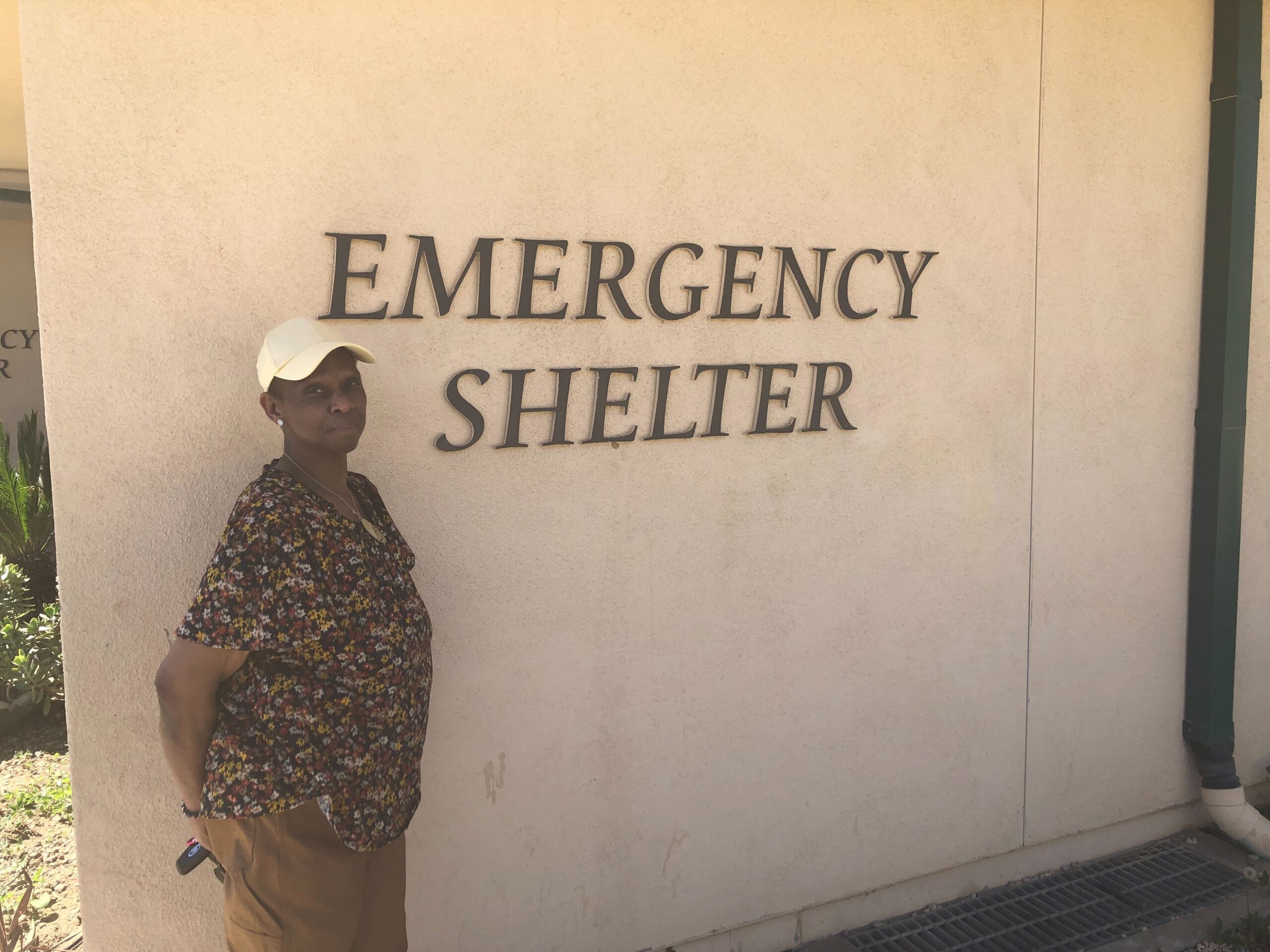
Now, faced with homelessness, drug addiction and food insecurity, Yvonne heard about a shelter that could get her off the streets. The Good Samaritan in Santa Maria provided Yvonne with housing, support services, and food from the Foodbank o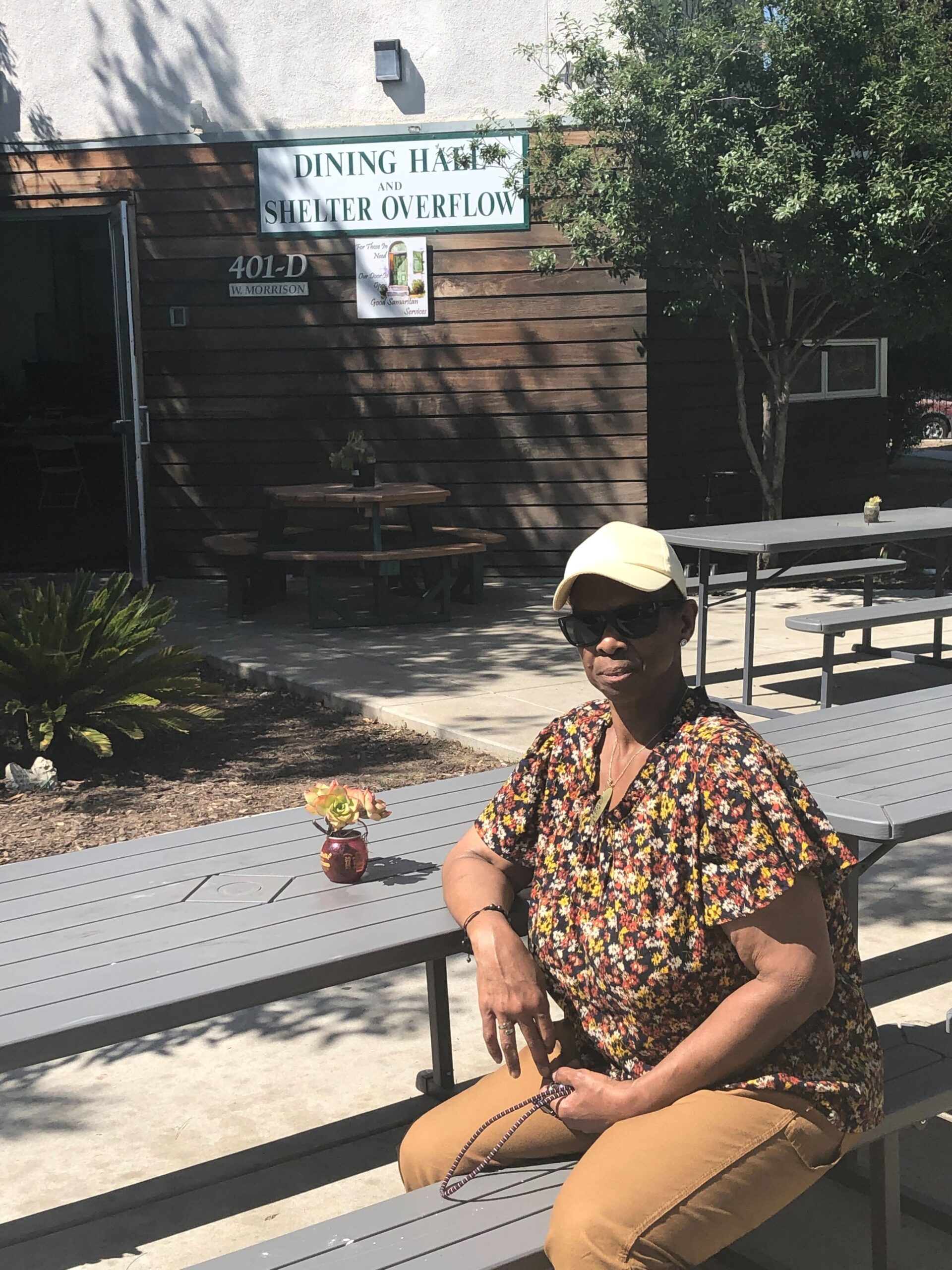 f Santa Barbara County. Breakfast, snacks, and a home-cooked dinner were provided each night. Returning to a routine of regular meals was the first sense of stability Yvonne had felt in a long time.
Yvonne’s path toward a healthier life was just beginning. Facing up to a year in jail for drug possession, Yvonne was offered the opportunity to go through Veterans Treatment Court. The court allows eligible veterans to complete the recommended treatment plan and comply with certain terms imposed by the court. Yvonne spent a year in treatment and two years at the shelter as she steadily pulled herself out of a grim place to one filled with hope and promise.
She even found a place where she could give back. “I started volunteering in the kitchen at the Salvation Army, cooking meals with produce and poultry provided by the Foodbank.” A recipient herself of the Foodbank’s services, Yvonne knew what a critical resource this food access was for so many veterans like her, who are living in shelters, transitional housing, or on the streets.
After overcoming many setbacks, Yvonne was ready to start a new life. She found low-income housing a block from her mother’s old place and landed a job as a warehouse manager, which she has been doing for three years. “As long as I could work and put a roof over my head, I did what I had to do. I wanted to take care of myself.”
Yvonne saved every penny she had, but money was still tight: there were utilities, car payments, gas, and other costs. Instead of choosing between groceries and other necessities, Yvonne found herself going to the Salvation Army to pick up bags of groceries containing fresh produce and canned goods. She knew that keeping her stability required her to stay in good health.
Sadly, Yvonne’s story is not unique. According to Santa Barbara County’s 2023 homeless report, surveyors counted 1,880 unhoused people on the streets in the county over a ten-day period.[1]
Surprisingly, the survey showed that most unhoused neighbors were local, and had not moved from other places:
“77 % of the unsheltered individual surveys reported they were living in Santa Barbara County when they first became unhoused, 74 % reported that their last permanent address was in Santa Barbara County, and 62 % reported that they had lived in Santa Barbara County for 10 years or more.”
Over the course of the last year, the Foodbank has served over 11,400 unhoused people, including veterans, homeless families, and older adults. The County currently offers 150 shelter beds and over 800 permanent housing options, but the high cost of living and shortage of housing in our community continues to make this issue complex and difficult to solve. At the Foodbank, it’s our goal to make sure that everyone in our community, regardless of whether or not they have a place to sleep tonight, has something decent to eat.
Currently, four Foodbank partners offer prepared hot meals, and with our network of partners we have over 200 food distribution sites countywide.
Visit our website for a list of locations for grocery distributions and hot-prepared meals.
Food Distributions
https://foodbanksbc.org/get-help/
Prepared Meals
https://foodbanksbc.org/prepared-food/
[1] Santa Barbara Continuum of Care – 2023 Point in Time Count: https://content.civicplus.com/api/assets/e552a174-0fa3-4b86-bdc5-d6b9918c0ff0